
HVAC systems encompass heating supply, central air-conditioning cooling water, hot-water circulation, heat-exchange stations, and ground-source heat-pump piping. Valves provide essential isolation, control, and pressure relief. With cast iron, cast steel, stainless steel, and copper alloys all available, designers and buyers often ask which material to specify. There is no universal answer. The appropriate choice depends on fluid temperature and quality, pressure rating, and corrosion-protection requirements. Proper material selection helps prevent corrosion, leakage, and seizure and supports reliable long-term operation.
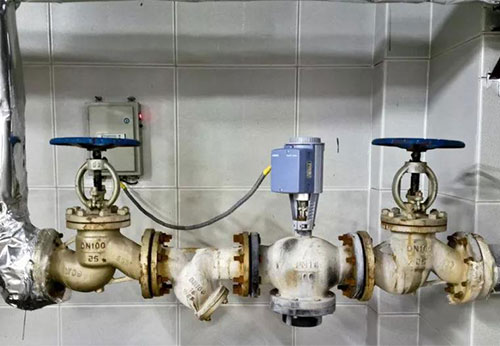
Gray cast iron is widely used in HVAC applications because it is economical, dampens vibration, and is easy to machine. It suits conventional cooling water and heating hot-water lines, typically at PN10 or PN16. Many butterfly, gate, and check valves in residential heating and commercial cooling-water systems use gray cast-iron bodies. Its corrosion resistance is limited, however. Water with elevated chloride levels, persistently damp environments, and large temperature fluctuations can promote internal rust and scale. It is generally unsuitable for high-temperature or high-pressure service and for softened or deaerated water systems.
Ductile iron offers substantially better toughness and impact resistance than gray cast iron and is less prone to brittle fracture. Its higher pressure capability makes it a common choice for modern HVAC systems. It is often specified for primary hot-water networks at heat-exchange stations, secondary district-heating networks, and large central air-conditioning circulation systems. Typical continuous-service temperatures can reach approximately 120°C, subject to the specific valve design and rating. Ductile iron also offers better corrosion resistance than gray cast iron and a balanced cost-to-performance ratio, making it a common body material for HVAC butterfly and balancing valves.
Cast steel provides high strength and good high-temperature performance. It is used in steam and high-temperature hot-water lines, including steam-side heat-exchanger connections and primary networks operating above 180°C. It offers higher pressure capability and good resistance to thermal shock. Its inherent corrosion resistance is moderate, so poor-quality water may require an internal protective coating. Because cast steel costs more than cast iron, it is usually unnecessary for ordinary ambient-temperature water service.
Stainless steel and copper alloys are used where corrosion resistance is important. Copper-alloy valves offer good sealing performance and resist rust; they are common on small branches, fan-coil connections, and manifold inlets, including small ball valves and strainers. They can suit potable-water and clean HVAC branch lines. Type 304 and 316 stainless steel offer stronger corrosion resistance for specialized duties such as closed-loop softened water, chemically treated circulation water, and seawater-source heat-pump systems. Their higher cost can make extensive use on large mains uneconomical.
Because HVAC operating conditions vary, ductile iron is often a practical first choice for ordinary cooling water and secondary heating water; cast steel is better suited to steam and high-temperature hot water; and stainless steel or copper alloys may be appropriate for branches with demanding water-quality or corrosion requirements. A single project may contain cold-water, hot-water, and steam circuits, so different materials can be specified by service area. Pango Valve System Inc supplies ductile-iron butterfly, balancing, and gate valves for integrated HVAC projects, with options such as internal corrosion-protection coatings and electric or pneumatic actuation. Material selection can be matched to the project's temperature and pressure conditions to help reduce maintenance needs.
Long-term reliability is central to HVAC operation. An unsuitable valve-body material can lead to blockage or loss of control and, in severe cases, leakage or pipe failure that damages equipment. Selecting the body material against the fluid, temperature, and pressure requirements, while balancing budget and service life, helps keep the system efficient and dependable.
Explore more practical valve knowledge from Pango Valve System Inc.
← Back to Knowledge Center