
Butterfly valves are widely used for isolation and flow control in water supply and drainage, HVAC, chemical processing, and municipal piping. In automated systems, electric and pneumatic actuation are the two main options. The right choice depends on the availability of compressed air, required operating speed, hazardous-area requirements, control accuracy, budget, and maintenance resources. Matching the actuator to the service conditions is essential for dependable and economical operation.
A pneumatic butterfly valve uses compressed air to drive a cylinder or rotary actuator, turning the disc to open, close, or modulate the valve. Its principal advantage is fast, responsive operation, making it suitable for rapid isolation in chemical process lines and emergency shutdown applications. Pneumatic actuators are relatively simple, tolerate overload well, and can be configured for hazardous areas. They are particularly useful in flammable or explosive environments when a reliable air supply is available. However, the site must have compressed-air infrastructure. Installing a compressor and air distribution solely for the valves can add substantial cost. Air-line deterioration and contaminated or wet air can also affect performance, while continuous fine modulation may require additional controls and careful tuning.
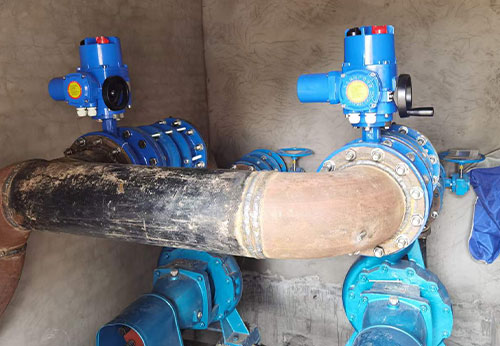
An electric butterfly valve uses a motor-driven actuator to position the disc. It can provide remote on/off operation and proportional control through electrical signals without a compressed-air system. Electric actuators generally provide precise positioning and stable feedback, making them useful for heat-exchange stations, central HVAC circulation, municipal water supply and drainage, and wastewater networks where sustained flow control is required. They integrate readily with PLCs and building automation systems for centralized monitoring. Standard electric actuators typically operate more slowly than pneumatic units and may not meet rapid emergency shutdown requirements. Hazardous locations require a suitably rated explosion-proof actuator, which increases cost. Frequent cycling may also increase the risk of motor overheating or mechanical binding.
As a practical guide, favor pneumatic actuation when reliable compressed air is available, rapid shutoff is required, or the installation is in a hazardous area or chemical process line. Favor electric actuation when compressed air is unavailable and the application calls for precise flow regulation or integration with building automation, HVAC, water, or municipal networks. Large projects may use both: pneumatic valves for emergency isolation on main lines and electric valves for modulation on branch circuits.
Pango Valve System Inc offers electric and pneumatic butterfly valves with ductile-iron, cast-steel, and stainless-steel bodies. Available configurations include resilient seats and customized triple-offset metal seats, as well as on/off, modulating, and hazardous-area actuator options. Selection guidance can be aligned with the customer's automation architecture and operating conditions to reduce commissioning problems.
The actuation method is a critical part of the pipeline control system. A mismatch can cause inadequate response, unreliable control signals, or unexpected infrastructure costs. Evaluate site utilities, control objectives, and applicable safety requirements together to select a reliable solution.
Explore more practical valve knowledge from Pango Valve System Inc.
← Back to Knowledge Center